


The Paradox of Suffering
“I know that real good has come of the endurance of pain.” – G.K. Chesterton
The Queen of Sorrows
The disciple who understood beyond all others how to unite our own sufferings with Christ’s was Mary, his mother.
From early in Jesus’s life, Mary knew not only that he was marked for suffering, but that she would suffer alongside Him. She has heard this from the lips of Simeon in the Temple, when Jesus was a mere few weeks old:
Simeon blessed them and said to Mary his mother, “Behold, this child is set for the fall and rising of many in Israel, and for a sign that is spoken against (and a sword will pierce through your own soul also) that thoughts out of many hearts may be revealed.”
Mary knew every suffering in Christ’s life, even those hidden from us: every skinned knee and bruised toe commonplace in childhood. She tended and accompanied Him with a mother’s perfect love, kissing hurts away and drying tears.
Mary witnessed also Christ’s public ministry: saw Him risking the traps of the Pharisees and Scribes, the attempts by crowds to capture or kill Him. She witnessed His rejection by unbelievers, His sorrows at their lack of faith, His mourning at the death of His foster-father Joseph and His friend Lazarus. She saw His ultimate betrayal by one of His chosen close friends whom He loved.
She followed Him along the way of the Cross, standing beneath the gibbet as He breathed His last. She held His broken body in her loving arms when He was taken down from the Cross, just as she had held him so many times from infancy! She helped prepare her own son’s body for burial.
In all these sufferings, she felt pain as well, as any mother would. But she also knew that her son was not destined merely to suffer: she saw hope beyond even the grave, with perfect faith and hope.
Weekly Scripture and Meditation
At the beginning of each week of Lent, you’ll receive an email with a Scripture passage, a Chesterton quote, and a reflection to meditate upon throughout that week. Rather than daily emails, we will embrace the silence and contemplative model of Mary, who “pondered all these things in her heart.” Scripture contains too many riches to exhaust in a single reading, even in its shorter passages. Therefore, we are suggesting using these Scriptures daily throughout each week of Lent, and practicing the mode of Lectio Divina to unlock what the Lord may be trying to say to you through His holy Word.
If you need extra fuel for your imagination, we encourage you to follow the Society on social media, where we will be posting daily Chesterton quotations appropriate to the season, which may fit in with your meditations.
Lectio Divina
Each week’s email will serve as the basis for that week’s meditation and reflection. We will encourage participants to revisit the chosen Scripture daily throughout each week, and pray with it using the method of lectio divina. This practice involves four stages:
Lectio (Read): Read the scripture slowly and carefully, multiple times, and note any particular phrases or words that start to catch your attention and “speak” to you.
Meditatio (Meditate): Imaginatively enter into the scripture by focusing on whatever caught your attention in the first step. Start by thinking about the scene, the words in their setting and context, and what they meant to those who first heard them. Then turn your eye inward, to yourself. Ask yourself: What is God trying to say to me right now through His Word? How does this Word challenge or encourage me?
Oratio (Pray): Respond to God’s message by praying about it. God has spoken to you, now speak to Him. Has His Word led you to ask forgiveness? To thank Him? To beg Him for a certain grace or favor? To resolve upon a certain deed? Tell God about it, and trust that He hears you.
Contemplatio (Contemplate): Rest in the knowledge that God has spoken to you. This can be the hardest step, but also the most fruitful. Sit in God’s presence and try to to be silent. You have seen that God’s Word is alive and active; now let that Word grow in your heart. You have spoken to God; now let the Holy Spirit speak within you.
Click here to find more resources on lectio divina from the Unites States Conference of Catholic Bishops.
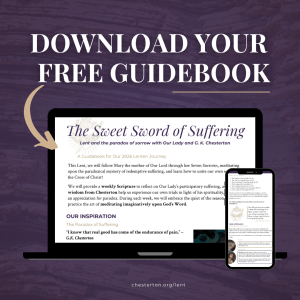 Download a free guidebook (PDF) to use along your Lenten journey! It has all the information you’ll need to pray with us this season.