

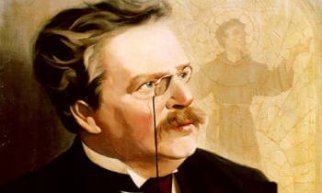
Cheese
by G. K. Chesterton on 1909-07-10 for The Daily News




As this year marks the 250th anniversary of the birth of America, it provides occasion and opportunity to reflect on how the thing has been getting along—to render up the nation’s report card, as it were. George Washington, in his first inaugural address, reflected on the prospects of the new-born country with sober foresight, setting
“If you can keep it” Read More »
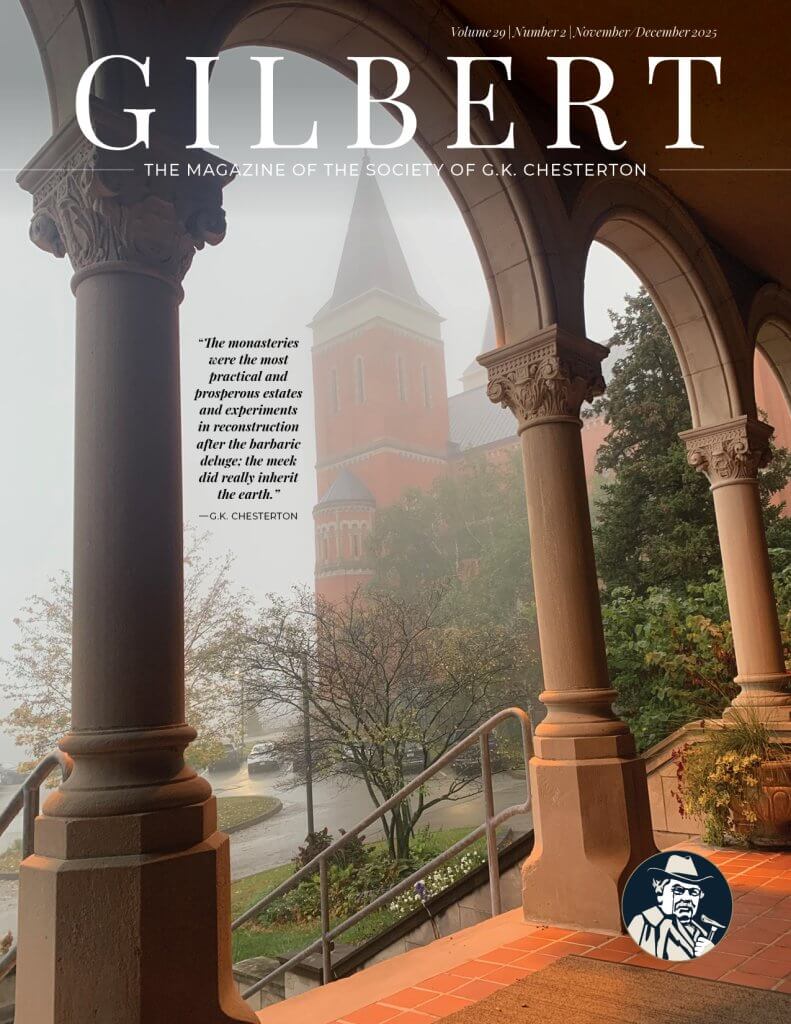
Guys of a certain vintage have a favorite bragging rights contest. It begins with, “We had it really bad when I was young,” followed by gritty, liberally embellished details of some near apocalypse in early life. The finishing touch is a smug, dismissive comment about the weak-pulse and sedentary lives of “young people these days.”
The Disappearing Summer Job Read More »
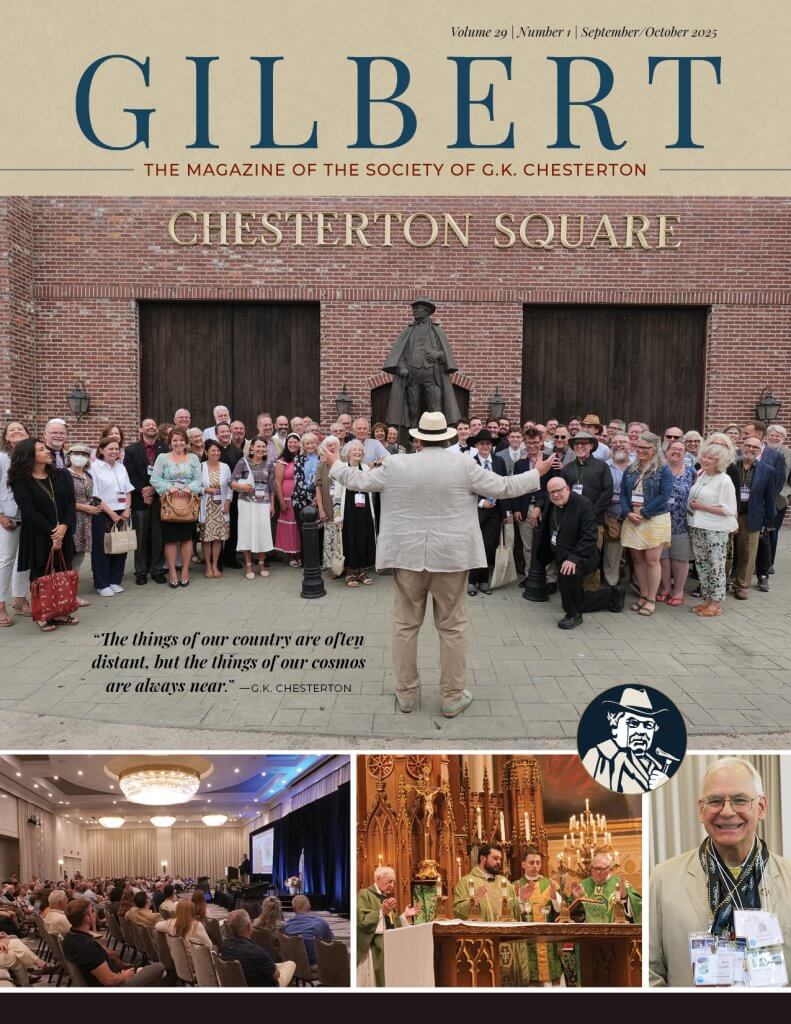
Zach Summers is Headmaster of Chesterton Academy of St. Margaret Clitherow in Knoxville, Tennessee. Even more difficult than opening a classical Catholic school in East Tennessee is opening a Chesterton Academy, for the mere reason that no one here knows who G.K. Chesterton is. The Appalachians are full of committed Catholics, but few have heard
Not with a Fight, but a Frame Read More »
Next year, the United States will celebrate its Semiquincentennial, or 250th anniversary. Per Wikipedia, other names under which this occasion is being heralded include “Bisesquicentennial,” “Sestercentennial,” “Quarter Millennium,” and—inspired, no doubt, by the advertising and marketing fads of late capitalism—the banal “America250,” which sounds more like a software suite than a memorial. The date of
On the Semiquincentennial(s) Read More »
You may know Jack. Jack’s a fairly typical American male in his late 30s – a bit out of alignment at the waistline and in a few other respects. A majority of his muscles retired from active service 20 years ago after he played his last high school football game, and his weakness for cheeseburgers
Jack’s New Girlfriend Read More »
One of the signs that a creative genius has made a lasting impact on culture is when his or her name enters the lexicon itself. This truth was brought home to me recently with the death of celebrated filmmaker David Lynch. In the days following, much ink was spilled on the word “Lynchian.” Whether one
Chestertonian (n.) Read More »
(Warning: Spoilers for “The Eye of Apollo” follow.) In the first nine stories in The Innocence of Father Brown, the priest discussed reason, redemption, pride, humility, and the presence of evil. In “The Eye of Apollo,” Father Brown sermonizes on a form of neopaganism and the arrogance of mind cure theories. As the narrative opens,
For his senior voice recital, Aidan Jones sang a text from The Ballad of the White Horse. You can see and hear it here. And a folk group, Pawns and Kings, wrote “Gilbert’s Song,” the lyrics of which are based on passages from Orthodoxy. And here is a song by Clamavi de Profundis that combines
Do you want to hear some Chesterton set to music? Read More »
In my 26 years, I have an admission that might surprise fellow bibliophiles: I tend to not enjoy re-reading books. Although I occasionally notice new insights the second time around, the familiarity of the plot in fiction or the arguments in non-fiction generally dampens the experience for me. Perhaps my perspective will shift with time,
Orwellian Unorthodoxy, Chestertonian Orthodoxy Read More »
I was recently reminded of an old joke about education. According to the joke, there are three great reasons to be a teacher: June, July, and August. Now, I haven’t heard this joke among Chesterton Academy faculty members, but I have heard teachers in other settings make further statements that imply that they actually may
The Socratic Method at Chesterton Academy Read More »
Writing of what he called “the thrilling romance of orthodoxy,” Chesterton observes: “People have fallen into a foolish habit of speaking of orthodoxy as something heavy, humdrum, and safe. There never was anything so perilous or so exciting as orthodoxy.” He goes on to relate how the historic Christian Church was in every age beset
The Heavenly Chariot Rides On Read More »
A beetle may or may not be inferior to a man— the matter awaits demonstration; but if he were inferior by ten thousand fathoms, the fact remains that there is probably a beetle view of things of which a man is entirely ignorant. If he wishes to conceive that point of view, he will scarcely